Please click on paintings to view larger.

Sunday, August 28, 2011

Surefire route to solid design

6x8" value study of a Maine shoreline

Just returned home from teaching a workshop in South Freeport, Maine. This demo was done to emphasize the value of values. :-)

Rule#1: Simplify, simplify, simplify. This is all about finding the large abstract shapes. If you take color out of the equation, it gets you looking at things in a whole new way.

When you're done your value study, stand back and ask yourself where you could link things together to strengthen your design. We need to remind ourselves again and again that we are not painting rocks, trees, water, sky. We are painting shape, value and color. And striving to employ a gorgeous variety of hard and soft edges to create depth, integration, texture and mystery.

Click for more tips on the whys of exploring your subject in this way.

The umbrella brigade hard at work. As offices go... I think we might be winning!

One of my students said she had an 8 hour car trip ahead of her and was looking for a way to work on her art while on the road.

There are a couple of games I often play when on long road trips. One is to squint down as I watch the passing landscape and compare the relative value of things. Use the number scale of 1 to 10, and really work on your ability to determine exactly what # one value is relative to another:
  • shadow on foreground bushes relative to shadow on background hills
  • blue sky relative to clouds.
  • what about the clouds? - sunny side to shadow side, verrrrrry subtle, half a value? Stormy? 3 values?
This will really fine tune your ability to assess value.

The other game is the "how would I mix that color?" game. As the landscape rolls by, ask yourself - what tubed colors would I use to mix the:
  • late evening sunlit hills
  • sunkissed mountains
  • what about the shadow sides? how would you neutralize the color?
  • morning sunrise filling the sky
  • is it one color at the horizon and another higher up?
  • what about the pavement? Exactly what would you use to nail that gray?
It's endless, and endlessly fascinating. You could even have a tiny palette in your lap and try to mix the colors you're seeing right there in the car (works better if you're not driving - steering wheel gets in the way.) If you decide to try this, I'd love to hear how it goes for you!

A huge thanks goes out to Bobbi Heath for inviting me out to Maine and organizing the workshop, including filling it with 12 AMAZING students! We had a fabulous 3 days together. You rock Bobbi!

Friday, August 12, 2011

Something New and A Little Magic

"A Twist on Tulips"
Original Oil - 6"x8"

You thought I forgot about 50 Flowers in 100 Hours, didn't you? Not so! Just been sidetracked lately.

All proceeds from the sale of this painting will go to relief efforts for the current famine crisis in East Africa. In addition, the donated amount will be matched equally by the Canadian government. In other words - you get a painting and you'll be doin' a whole lotta good!

Something New
I'd like to step outside of the art forum for a moment and share some other news with you. This is my art blog, and I assure you it will remain dedicated to art related posts in the future, but I wanted to let you know about something else I've been up to.

In addition to taking and teaching a lot of workshops in the last year - I have also been pursuing something I'm as passionate about as I am painting - working toward certification as a life coach. It's something I've put off for years, thinking I already had a fantastic career, but the call just kept getting louder and I finally decided to go for it.
 
The journey from there to here has been enormously powerful and enlightening. I have learned so much about how we get in our own way, and how empowering it is to get really clear about our choices. I've been working with my own amazing coach for some time now, and we've been making some pretty big strides together.

What Is It?
If I were to sum it up, I would say that a great coaching relationship supports you in getting connected with your biggest, most fabulous vision for yourself, and then helps you go out there and get it! (Wimping out not an option.)

If you're curious to find out a bit more about what I'm doing as a coach, and the wonderful benefits of working with one, please check out my coaching website. I've also just started a coaching blog. It will be filled with all kinds of lift your spirit, conquer those naysayer voices kind of inspiration, so if that interests you, please drop on over and have a look.

And Now a Little Magic
This crossed my path a few days ago and I thought you would love it -  a most amazing time lapse video of night turning to day in a very special place in the world. Click on the little white icon on the bottom (to the right of the blue HD) to watch it full screen.

Friday, August 5, 2011

Plein Air Tip and a Big Fat Challenge

"The Sunshine Coast"
Original oil - 6"x8"

What trips you up the most in plein air painting? It's a good thing to ponder. Once you have an answer, there is huge value in focusing on that particular thing the next few times you go out.

For me it's detail and design. Seeing past all the detail - and the challenge of finding a good design. Here is one exercise that will really help you address both of these issues at once:

Do a quick (15 minute) value study of the scene - in paint - using only black, white and one or two mid-tone grays.

Photo of scene

6x8" value study

Remember the goal is not to copy the scene. It's to create a strong design. As you go -  squint and compare, and be exploring:
  • how to eliminate detail
  • where to link shapes to create an interesting pattern of light and dark
  • where you can lose edges by bringing values close together (to connect shapes)
  • where to push values lighter or darker to strengthen your design
  • what stays - what goes
Lots of folks do value studies with pencil in a sketch pad. I prefer to do them in paint as it gets me thinking about edges and brushwork at the same time that I'm sorting out simplification and design. This was a workshop demo so there is no finished painting to show, but you get the idea.

Big Fat Challenge:
A few of my students have taken on a challenge to do 50 of these studies in the next 30 days. If any of you want to do the same, jump on in. Once you've done 50, send me a photo of your best one, and a photo of the scene it was done from, and I'll post a selection of them here on my blog later in the fall. Bonus - you have until September 30th to get me your image. :-)

On another note, I am only teaching one Daily Painting workshop this year. It will be in my Canmore studio Oct. 1st-3rd. For more details please click here.

Saturday, July 30, 2011

Sunshine Coast plein air workshop

"Gibsons Landing"
Original oil 6x8"
Click here to bid

Robert Genn and I taught a plein air workshop on the Sunshine Coast last week. I taught 4 days and Robert parachuted in for a couple of demos and some wonderful sharing of wisdom mid-week.

Robert doing a demo for the group

I have watched Robert paint several times in the past, but this time I was particularly struck by what an intuitive painter he is. He spends a few moments resting in his custom designed painting rig (has to be seen live and in person to be fully appreciated), and then he begins his process of shape making on the canvas, pulling ideas from all that is in front of him, rather than a particular, specific scene. His strength as a plein air painter seems to me to be in his wonderful ability to bring his imagination to the game. He adds so much of himself to the scene, a bright red spot here, a gorgeous gradation there, an expert balancing of elements that leads to a compelling and captivating design. "Commit and correct" is his mantra, it's all about finding out.

Robert's demo in progress (acrylic on canvas)

This is a demo before the important next steps of glazing and refining, but you can see the strength of design and interesting elements that are already present, ready to be pulled together in the final stages. Sorry I didn't take a finished photo, so this is all you'll see unless you track the finished piece down online.

Next post I will talk about a couple of the exercises I worked on with the students that really seemed to support huge progress by all of them through the course of the week.

Thursday, July 14, 2011

Burdick/Lyon workshop - Part 3

"Doulton"
Oil on linen - 11x14"

This will be the final post on Scott and Sue's workshop.

This portrait of Doulton (Sue's Spanish teacher) was from the afternoon of the 10th day, when things finally began to click in and integrate. Had some help from Scott on this one, and I loved painting it. Doulton posed for us twice, and there was something so wonderful about his energy - he had a big, easy smile and a warmth in his presence that was immensely captivating. It was super rewarding to bring all the learning into capturing the essence of this wonderful model.

Scott and Sue's morning demo of Doulton

"Begin in a slow, steady, meditative mindset" - Scott
"Don't work out of stress - work out of thoughtfulness." - Sue

We saw this demonstrated again and again - a slow, deliberate approach by each of them. And at least once every hour, Scott would spontaneously announce, somewhere between a question and a declaration, "Isn't this fun?!" - I was never quite sure if he meant it or if he was trying to convince himself - but it definitely seemed to keep him in the zone and connected with his process.

So here are some key pointers:

5 Darks of the Face: (when lit from above)

  • eye sockets
  • base of nose
  • top lip
  • beneath lower lip
  • under chin

Initial block-in:
  • Immediately establish the correct angle of the eyes, nose, mouth
  • Initially draw changes in angles, point to point - round things off later
  • Don't move off of one point until you're sure it's accurate (get eye correct before moving to nose, look for the smallest jumps possible, nose correct before moving to mouth)
  • Think only of shadow and light at first, the largest division of lights and darks
  • Squint and lose halftones to create the drama of light, otherwise you will over-model the lights and not make the shadows dark enough - everything will come too close to the middle
  • It's easy to make the halftones too dark, remember they belong to the light
  • Color isn't critical at this stage - value and temperature relationships are what's important
  • Open eyes to see color - squint down to see value

Once the block in is complete, begin refining shapes and edges, using halftones to turn form.

When you've got a lot done and are trying to decide what's next - ask:
  • Where is my lightest light?
  • Where is my darkest dark?
  • Where is my hardest edge?
Put these in and diminish everything else.

"I am not concerned with getting a likeness. My focus is on getting the drawing, shapes, values and colors correct - and trusting that this will result in a likeness." - Scott

You can see that almost all of these pointers are universal - your work will grow if you apply them to whatever subject matter you're painting. It's impossible to try and share in a few short blog posts all the learning that happened in a 10 day intensive workshop, but I hope these few things have been helpful, and inspired you to put these two wonderful teachers on your list of important ones to study with.

Monday, July 4, 2011

Burdick/Lyon workshop - Part 2

Susan and Scott demo-ing quick sketch in tandem.

I have been home from the workshop for a week now, and as I am processing all the learning, my strongest feeling is what a truly great honor and privilege it was to study with these two incredibly gifted artists and teachers.

What I would like to share today is the biggest thing they impressed upon us every day of the workshop:

Confident, well honed drawing skills are essential for a painter to become masterful. Top level painting requires constant, careful attention to keeping these skills sharp, and drawing from life, because it is so much more difficult than working from photos, is the best way to achieve this end.

Scott Burdick - 45  minute figure demo

In the first few days I really couldn't believe how slooooooowly and carefully they had us drawing, insisting we were measuring, checking, rechecking - not moving from one point to another until we were sure where we were leaving was accurate. It felt truly painful to hold my attention for this long as all the old familiar voices that have kept me from focusing this intently on drawing in the past rose up: "It's close enough, my measuring tool is out of focus, it's too hard to see it accurately anyway, I can't find a measurement that matches, even when I measure it doesn't come out right (read: even when i measure incorrectly ...), this is way too hard, does it really matter? I'll fix it later..." and they just kept circling the room, reminding us again and again that "Artistic license comes after the careful, accurate drawing is mastered."

So I believed in them and stuck with it, and somewhere around day 4 or 5 it began to click into place. My drawings actually started to look like what I was drawing - well proportioned, everything fitting on the page exactly where I intended it, a little like magic. Timed perfectly to move us into painting, where we spent the next 5 days really experiencing how inextricably intertwined these two aspects of creating art are. More next post, for now I'll leave you with the workshop mantras:

Squint and compare. Slow down. Work carefully.
Squint and compare. Slow down. Work carefully....


Susan Lyon - 45 minute figure demo

Friday, June 24, 2011

Scott Burdick/Susan Lyon workshop - Part 1

Scott Burdick doing a charcoal sketch demo of a Planes of the Head mannequin. (Yup, he did hold the charcoal stick this far back for pretty much the whole drawing).

I'm currently in North Carolina with a couple of painting buddies taking a 10 day intensive workshop with Scott Burdick and Susan Lyon. 5 days drawing and 5 days painting the figure and portrait.

It is academic, thorough, methodical and packed with core fundamentals that are presented over and over in various exercises geared to really connect us with the value, importance and skill of seeing accurately. This workshop feels like I have landed in the middle of an art students league and I am LOVING it!

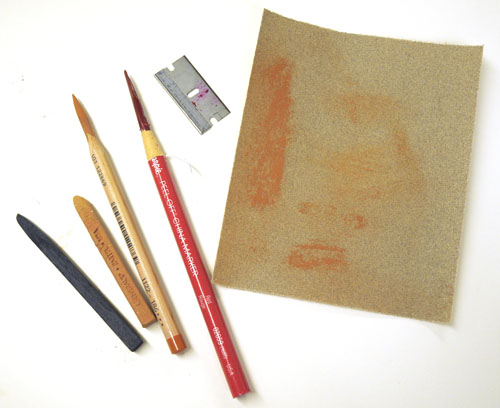
Our first demo was a basic charcoal drawing,. Throughout it Scott shared tons of info on how to sharpen your drawing tools, how to hold them, how much pressure to apply, how to use them for measuring, and what to look for and consider as your drawing is developing.

Charcoal, chalk stick, pastel pencil, and china marker, all sharpened to long, fragile points to force you to hold them far back and use a super light pressure.

The biggest tip this day was to begin with the big shapes of light and shadow, blocking in the abstract forms, keeping everything in either the light or the shadow. Lots of squinting and comparing to maintain a clear division, and keeping the half tones in the light, and the shadows dark enough to avoid losing the pattern of light and dark. After the demo we all drew a head model, and then the next day moved to quick sketches of the figure. Below is one of several I did that day.


 "Naomi" - 45 minute charcoal sketch

I am learning sooooooo much, totally awesome. Scott and Sue are hugely knowledgeable, so kind and helpful, bending over backwards to make sure everyone (20 students) is getting enough attention and fully understanding the concepts they're teaching. They are top notch instructors and should be on every oil painter's hit list of artists to study with.

Sorry this is not a super articulate post, it's late and we are on day 7 of the 10 days, but I wanted to start to share some of what we are learning.

More great stuff here: Scott and Susan workshop Part 2 and Part 3.

FYI: The Planes of the Head mannequins are great academic tools for working on drawing skills in your studio. You can order them on the website linked here.

Saturday, June 11, 2011

Start with the essence

"Daisy" (block-in)
Original Oil - 6x6"

This was a demo from a recent workshop done to illustrate the concept of blocking in the large abstract shapes when beginning a painting. This is especially helpful when you are dealing with a complex subject (like 9 million petals). The trick is to really squint down and reduce your subject to the key shapes of light and shadow. The next step in this painting will be to begin to introduce detail and refine edges, but if you can capture the underlying structure and design elements of your subject then the detail rests on on a strong foundation. In this way less becomes more.

On another note, I will be teaching workshops in an interesting variety of locations over the next 4 months. Please click on the links below for more details:

Plein Air in Southfreeport, Maine - Aug. 19th-21st               
Heli-painting in the Bugaboo Mountains, BC
- Sept.6th-10th
Plein Air in Kauai, Hawaii - Oct. 24th-27th
 
Robert Genn's recent post opened the door on some differing perspectives about workshops. Here is mine:

We live in such a marvelous time - we have the ability to handpick the artists whose work we admire,  and travel far and wide to share a few days learning from and talking art with them. If we are lucky a keen student or art group will bring a valuable teacher into our own back yard. These are golden opportunities. I am a huge believer in studying with fellow skilled artists as a means of deepening and broadening our own abilities. Painting is a highly complex pursuit with endless possibilities for advancement and improvement, and whatever we may know, there will be others who know something in addition to it.

At the very least, a good workshop will shake things up and push you out of your comfort zone. At best, it will give you some fresh ideas for exploration, and one or two pearls of wisdom you will carry with you for the rest of your painting life. As well as teaching workshops, I take at least one a year. It has become my process when I return from a workshop to dedicate myself to honing the best of the skills I've learned, and then incorporating them into the rhythm of my own teaching. In this way, my students learn not only from me, but indirectly from all the wonderful artists I have studied with.

Wednesday, June 1, 2011

Fun on Vancouver Island

"Salt Spring Island"
Original Oil - 6x8"

This was a demo done a couple of weeks ago on Salt Spring Island, BC. It was a flat, gray, mid-afternoon scene and I was completely uninspired by what was there.

I always find this is a perfect time to dig into the bag of tricks and play with an exercise. In this case I chose one of my favourites - thick paint right out of the gate, so thick you have to use a stiff brush and scoop it off the palette. The trick after that is to apply it with a light enough stroke that you don't ultimately wind up with a big, muddy mess.

Every time I try this exercise it is SO fun. There is something about all that paint that feels really playful, and it seems to open up some special, magic portal into creativity. I find I start mixing more colorful colors, trying bolder ideas, and moving the paint in rhythmic ways just because there's so much there. The best way I can think of to describe it is it's like finger painting with a brush - gooey and gorgeous and full of wonderful surprises.

Monday, May 23, 2011

The joy of scales

"One Compelling Note"
Original oil - 6x6"
Click here to bid

Just got home from teaching a couple of workshops on Vancouver Island. In working with 30 students over 6 days, I was reminded of our reluctance to spend our painting time on work that is not leading to a "finished product" - something tangible to show for our time. Coupled with this is the idea that painting is supposed to be fun. Always and only fun.

I find whenever I propose the idea that serious painting requires determined, intensely focused, incredibly challenging hard work, a minority of heads in the room nod in agreement, while most folks start tensing up.

When we are presented with an exercise (or several) that forces us out of our comfort zone, our natural inclination is to run, fast and far. We like to move away from awkwardness, from "looking bad", from anything that has the potential for "failure" built in to it.

The key is to notice that feeling and dive head first into the discomfort, in service of our growth - of moving toward our full potential as artists. We can only get there by breaking this enormously difficult undertaking into its individual parts (drawing, design, shape, value, color, and medium specific technique) and honing each one, so that our wholes become an expression of all that we are capable of.

Friday, May 13, 2011

Carolyn Anderson workshop (part 2)

The two images shown here are detail sections of portraits I did in the Carolyn Anderson (totally awesome!) workshop. I'm showing the close-ups to illustrate what I think was one of the most important things I learned: how to paint soft eyes and mouths.

There is such a strong pull (for me) to carefully draw in the shapes of things and then fill them in. Carolyn likens this to walking down a hallway slamming doors of possibility closed behind you. (I like to call it safety.) But I was there to learn, so when I caught myself doing that in the workshop,  I would intentionally drag off a couple of edges or bring the values really close together where edges met.

 She also encouraged keeping the larger shapes of light and shadow open (not outlined and filled in). In her words "it's important to maintain the integrity of the dimension of the shapes." I had to bend my mind around that one, but essentially I think I got her meaning. In order to create dimension (the feeling of things "filling up space" and having 3 dimensional form, as well as the feeling of the space itself), edge variety is critical (soft, hard, lost - and interesting shape of line when there is one.)

Just a few things to be thinking about once you get past the easy part of getting the drawing, color, and value right. :-)

Wednesday, May 4, 2011

Carolyn Anderson workshop (part 1)


"Tiffany"
Oil on linen - 16x12"

Just back from a 5 day Carolyn Anderson workshop in Scottsdale, AZ. It was FAN-tastic! Learned so much - she is funny, direct, wise, focused and wickedly talented!

This painting was actually done outside of the workshop on the second night at an open studio put on by the Scottsdale Artist's School. (If you haven't heard of the school or taken a course there, check it out. They offer workshops by some of the best artists painting in the States right now. It's a top notch venue, and the staff bend over backwards to provide an outstanding experience.)

Okay, it's pretty much impossible to share all I learned as it was fairly intense, but here are some key thoughts I brought home with me. (Look for my next post to see images of paintings that illustrate what I learned between this painting and the end of the week.)
  • Strive to put down each brushstroke with a clear intention.
  • As things are rounding or moving back in space - soften edges.
  • Think of eyebrows as accents on the bottom of the forehead (love that).
  • Painting is a process that continually responds to information - not step by step until it's done.
  • Look at the model and the painting together throughout the painting process.
  • Stand far enough back to see all 4 corners of the canvas.
And a couple of powerful things to contemplate:

"We see not only an arrangement of color and shape - but an interplay of directed tensions." Rudolf Arnheim
(This, once I got it, opened up my ability to see and draw in a whole new way.)

"Paintings are like snowflakes. They are unique because of all the events that are unfolding as they fall to the ground. They are not meant to be a fixed idea from beginning to end." Carolyn Anderson

Tuesday, April 19, 2011

Best of Show - Raymar Fine Art Competition


"Los Cuatro Amigos"
Oil on Linen - 16"x 20"

I am super happy to announce that one of my favorite paintings I have done so far this year just won Best of Show in the Raymar Fine Art Competition for March.

A big thanks to judge Michael Gormley - Editorial Director of American Artist magazine for selecting it. Please click on the Raymar link above to see the other winners.

Sunday, April 17, 2011

Off to Scottsdale

"Daisy Reflected"
Original Oil - 6x6"
Click here to bid

Continuing with the 50 flowers project, I tackled this daisy recently. It was set up on a piece of glass laid over a black cloth, and viewed at eye level. Painting the reflection was a supreme challenge, the brain got very busy telling me what it thought it was seeing and I had to keep reminding myself to SEE what was really there.

I leave tomorrow to Scottsdale, AZ for the Carolyn Anderson workshop and the Legacy Gallery's Salon of Fine Art opening night. Look forward to reporting in with some great new learning next post!

Friday, April 1, 2011

Painting models from life


"Moira"
Oil on Linen 16x12"

My good painting friend Sarah Kidner and I have been hiring models to come to our studio lately to prepare for two terrific workshops we will be taking this spring. (A 5 day figurative w.shop with Carolyn Anderson in April and a 10 day figurative/portrait intensive with Scott Burdick and Susan Lyon in June).

Mostly we have been doing one afternoon a week, but last week in a big push to get our chops down, we had a model in every day for 5 days. And just to add to the fun we invited some other friends to join in, which was huge entertainment value. Lotta whining going on, but we did get lots of work done, and we agreed that 5 days straight made for some clear progress - if not in skill, then at least in focus.

Here is what I find valuable in painting models from life:
  • It demands you address your drawing weaknesses
  • You can see amazing nuances that simply do not exist in photo reference
  • There are a world of subtle color temperature shifts beckoning to suggest form
  • It is divinely, completely captivating
  • It is hands down the hardest thing you can do as an artist
  • It DOES get easier with practice
If you're serious about developing your skill as an artist, I can think of no better way to tackle that goal. You don't need to hire professional models, any warm body that will sit still for you is an ideal subject. We pay our models $20 an hour and usually have them in for 3 hours at a time. We have found that putting a movie on the laptop for the model keeps them entertained for a sitting, and they just take breaks when they feel the need.


L-R: Liz, Sarah, Gaye Adams, Jean Pederson and Bobbi Dunlop in Sarah's studio